News
Versions in action: updating our preprint on preprints
bioRxiv and medRxiv were initially an experiment themselves, to see how preprint servers in the life sciences could work and impact science. In that vein, in 2019 we posted a preprint on bioRxiv summarizing the aims, technical bases of the infrastructure, and data about bioRxiv preprints. This was helpful for articulating how we work and sharing the results of that experiment.
The other great thing about preprints is that they can be revised! So, we’re now doing that here as well, releasing a new version of this preprint that brings the information up to date, provides new data on recent trends and use of the server during the pandemic, and summarizes some of the findings from a new survey of authors and readers. As many in the community discuss a possible future in which articles are no longer finalized as static versions of record (VORs) but instead living documents that can be periodically updated, this preprint provides an example of how this may be appropriate for at least some types of article (as always, the previous version of the preprint is still available via the Info/History tab).
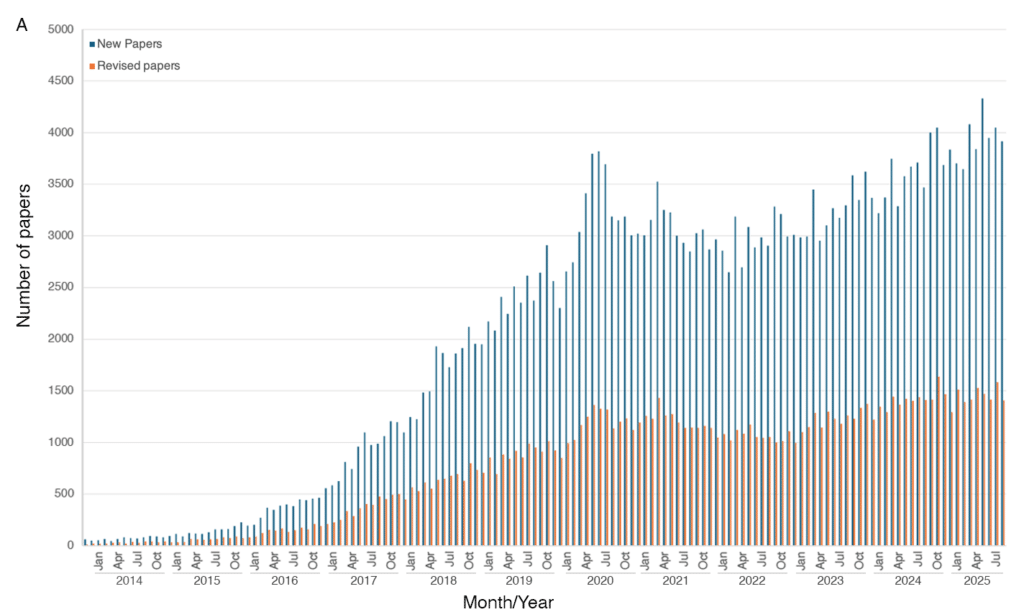
The updated preprint includes charts showing the growth in bioRxiv posts over 12 years. Submissions have increased steadily, with a spike early in the pandemic that was followed by a short lag before research activity returned to normal. We also present data on publication outcomes, revisions, withdrawals, and how different subfields of biology have adopted preprinting at different rates.
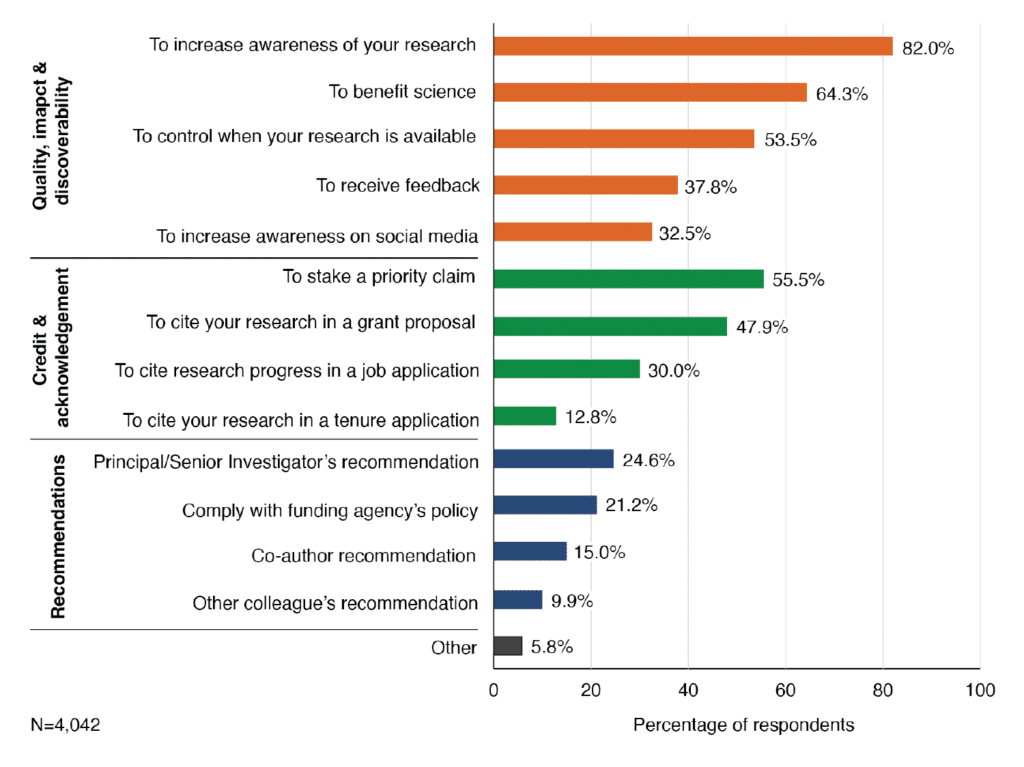
The updated preprint also features key findings from our 2023 community survey (full results on Zenodo). More than 7000 users responded and provided immensely helpful information about their motivations, practices, and aspirations for preprinting. Authors expressed a variety of motivations for preprinting. The vast majority share preprints to increase awareness of their research, but many say they post work as a preprint to control the timing of dissemination, stake a priority claim, or allow them to cite work in a grant or job application.
The survey revealed that a significant fraction of researchers post preprints before they submit their work to a traditional journal, which gives them a window in which they can receive feedback and improve papers before submitting them to the journal. Others submit around the same time that they submit to a journal. Only 36% of authors said they have not received feedback on their preprints, but most feedback is private, via email, so there is room for change or growth in public commenting approaches. The survey also confirmed the dominance of Microsoft Word as an authoring tool.
We hope the updated preprint is a useful summary and resource for members of the research community and those working more broadly in science communication. We plan to update the article periodically as usage continues to grow and new features are introduced.